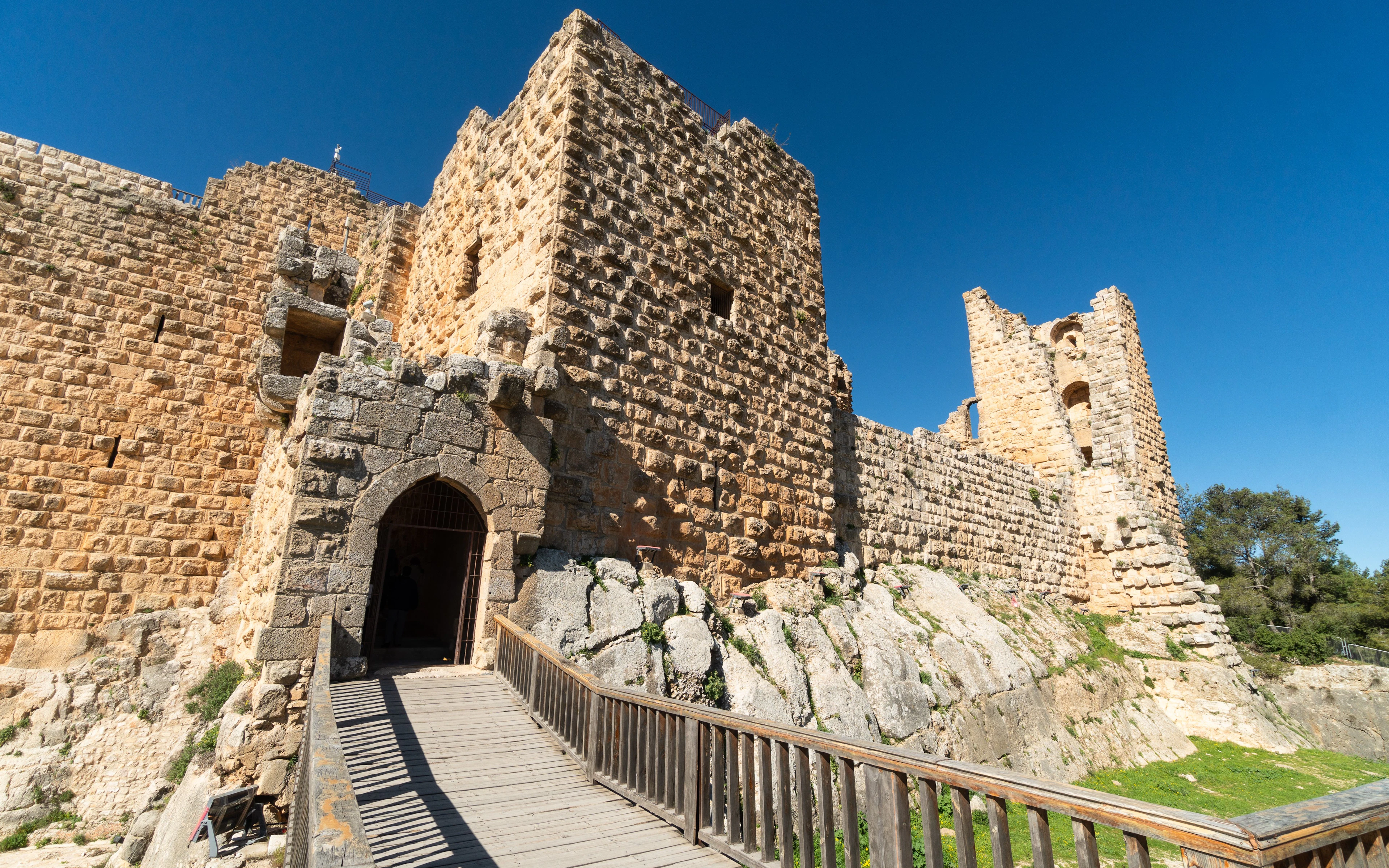
A day trip from Amman to Jerash, Ajloun Castle, and Umm Qais is realistic, but it's a long one. Expect 10–11 hours door to door, roughly 4.5–5 hours on the road, and 4–5 hours split across the sites. Done well, it gives you Roman ruins, a medieval hilltop fortress, and northern border views in one sweep. The main decision is simple: go guided or private for easier logistics, or accept that doing all 3 independently takes real planning.

  • Travel time: 10–11 hours total from Amman for the full 3-site loop.
  • Time on the ground: 4–5 hours across Jerash, Ajloun Castle, and Umm Qais.
  • What fits in a day: Jerash's main ruins, 45–60 minutes at Ajloun Castle, 60–90 minutes at Umm Qais.
  • What's included: Entry fees are usually covered on tours; confirm whether lunch is included before booking, since this varies by operator.
  • Best way to do it: Guided small-group tour, for the easiest logistics and added context.
  • Jordan Pass: Worth getting if you're traveling independently. It covers entry to all 3 sites.
  • Stay overnight? Optional, but worth it for slower pacing or better light at Ajloun or Umm Qais.

Jump to:

Worth a day trup?

Getting there

Your day, hour by hour

Plan it right

FAQs

Should you do Jerash, Ajloun, and Umm Qais as a day trip from Amman?

ApproachWorth it?What it actually feels likeBetter alternatives

Guided 3-site loop

Yes, best way to do it

You cover all 3 sites in 10–11 hours with the least friction on timing, navigation, and entry logistics.

Best option as a day trip

Private driver or private tour

Yes, if you want more control

The road day is still long, but you can shorten lunch or move faster at Ajloun and Umm Qais.

Best option if you value flexibility

Self-drive rental car

Yes, if you’re a confident driver

You'll spend the day managing roads, parking, route timing, and a tiring drive back to Amman.

Guided tour if you want context, or stay overnight for a slower pace

Public transport and taxis

Not ideal as a day trip

The route works in pieces, not as a smooth loop. Transfers eat into the day, especially after Ajloun.

Drop Umm Qais and do Jerash plus Ajloun only, or hire a driver

Late-start day (after 8:30am)

Possible, but rushed

Compresses Jerash, shortens Umm Qais, and turns the day into clock-watching.

Start earlier, or drop Umm Qais

Guided tour or DIY from Amman?

For this route, guided usually wins on practicality. You’re linking 3 separate sites across northern Jordan, and the real friction is not entry lines, it’s route planning, timing, and making sure the long return from Umm Qais doesn’t cut your day short. A private car gives similar ease with more flexibility, but if you go fully independent, plan for a much more logistical day.

Nymphaeum ruins with Corinthian columns in Jerash, Jordan.

How to get to Jerash, Ajloun, and Umm Qais from Amman

By organized day tour (recommended for most visitors)

You're picked up in Amman and driven along a fixed route, usually Jerash first, then Ajloun, then Umm Qais, before returning to the city. Total time runs 10–11 hours door to door. Best for first-time visitors and anyone without a car. You gain efficiency but follow a set pace, and some tours provide a driver rather than a full on-site guide, so check what's included before booking.

By private driver or private tour

A private car covers the same loop with hotel pickup and more freedom to adjust stop length and break timing. Still around 10–11 hours total, but you control where the day stretches or shortens. Best for families and photographers who want custom pacing. Flexibility costs more, and unless guiding is explicitly included, you may still be exploring the sites on your own.

By self-drive rental car

Drive from Amman to Jerash (50–60 min), continue to Ajloun Castle (40 min), then head north through Irbid to Umm Qais (1 hr 15 min), before driving back to Amman (about 2 hours). Best for confident independent travelers. The road day is long, Ajloun's approach is winding, and the return leg feels heavy after a full day of walking.

By public transport and taxis

Take a bus or minibus from Amman to Jerash, then patch together taxi or shared-taxi links toward Ajloun, Irbid, and Umm Qais. This takes longer than driving, with multiple transfers and no smooth same-day flow. Best for very budget-focused travelers with schedule flexibility. It's the hardest way to do the full loop and the least reliable option for reaching Umm Qais and returning comfortably the same day.

What your Amman to Jerash, Ajloun, and Umm Qais day actually looks like
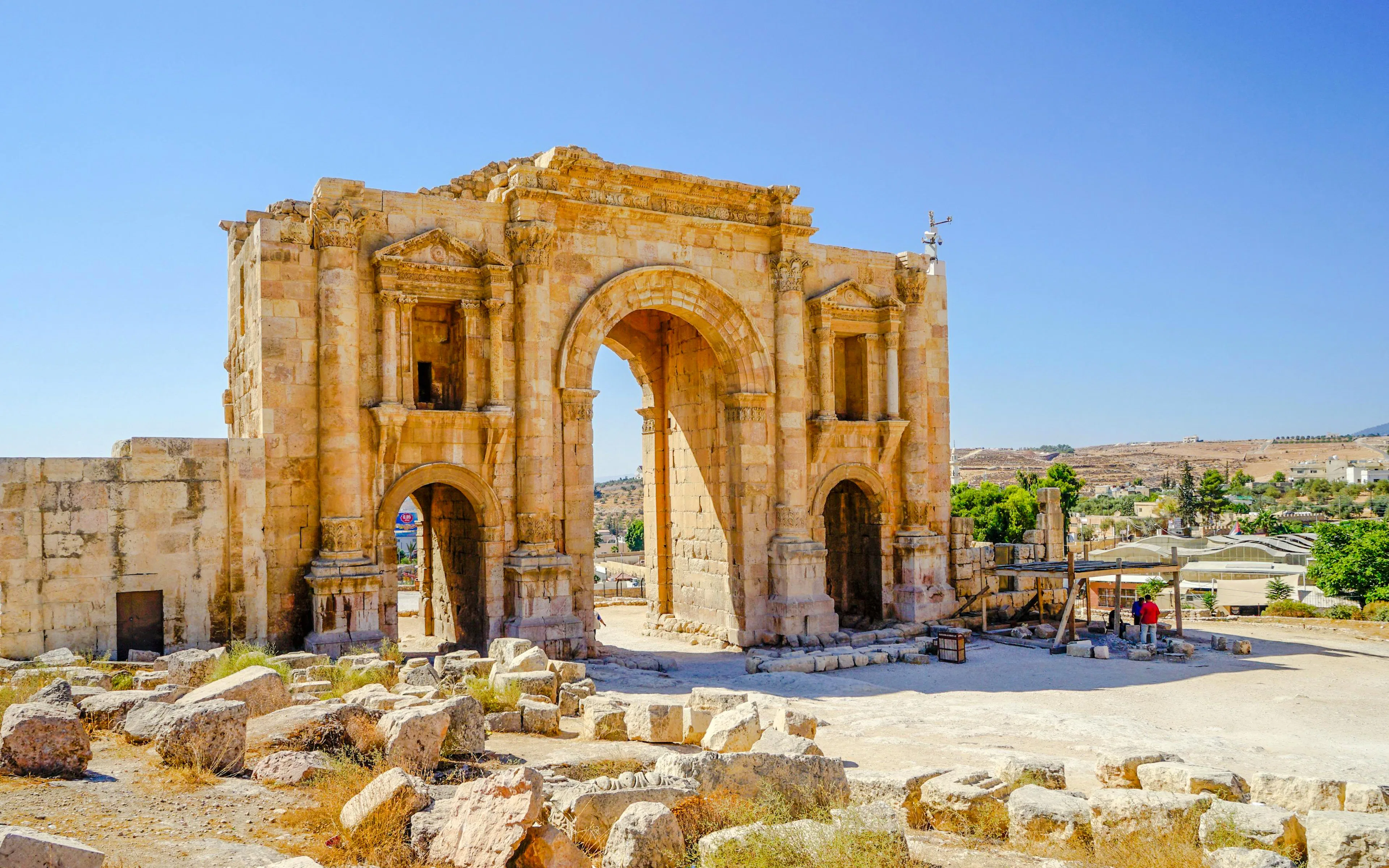
Hadrian's Arch in Jerash, Jordan, with ancient stone ruins in the foreground.
1/7

Jerash arrival and Hadrian's Arch

You usually reach Jerash while the morning is still workable, before the stone reflects full midday heat. Hadrian's Arch sets the tone immediately: this is a large Roman site, not a quick ruin stop.

  • Time needed: 20–30 minutes within a longer visit.
  • Local tip: Use the early part of your energy here; Jerash is more exposed than it first looks.

The Oval Plaza and Colonnaded Street

Past the arch, Jerash opens into the Oval Plaza, ringed by limestone columns, then the mile-long Colonnaded Street that runs through the ancient city center.

  • Time needed: 30–40 minutes within a longer Jerash visit.
  • Local tip: Take your wide photos early, tour groups tend to cluster here later in the morning.

South Theater and Temple of Artemis

Jerash starts to feel less like a ruin field and more like a real city once you climb the theater and head uphill toward Artemis. The South Theater gives you acoustics, views, and a sense of ceremony; the Temple of Artemis gives height, columns, and wind across the hill. This stretch is where the walking gets more noticeable.

  • Time needed: 45–60 minutes within a longer Jerash visit.
  • Local tip: Save a little energy for the uphill section, the best viewpoints come after the climb.

Ajloun Castle

Ajloun shifts the day from a Roman street plan to medieval defense. Inside, the route moves through darker vaulted rooms, arrow slits, staircases, and rooftop lookouts over greener country than most visitors expect in Jordan. It feels tighter, more vertical, and more physical than Jerash, but also shorter and easier to absorb quickly.

  • Time needed: 45–60 minutes.
  • Local tip: Go all the way to the highest practical viewpoint first, then work your way down if time is short.

Lunch break and the drive north *(Full-day only)*

This middle stretch matters more than people expect. A 3-site day is not just monuments; it’s also road rhythm: hills, villages, a restaurant stop, and the gradual sense that you’re pushing deeper into northern Jordan. The lunch break can reset the day, or slow it down too much if service is long and you started late.

  • Time needed: 45–60 minutes, plus transfer time.
  • Local tip: Keep lunch simple if Umm Qais is a priority, long buffet stops cost you the clearest afternoon margin.

Umm Qais ruins *(Full-day only)*

Umm Qais feels quieter and more reflective than Jerash. The basalt stone changes the mood, the walking is gentler, and the archaeology is less overwhelming, but the setting does a lot of the work. You’re not coming only for columns or theater remains, you’re coming for the way the ruins sit above a landscape that opens far beyond Jordan.

  • Time needed: 45–60 minutes.
  • Local tip: Don’t rush straight to the viewpoint, the ruins make more sense once you’ve walked through them first.

The viewpoint over the Sea of Galilee and the Golan *(Full-day only)*

This is the emotional end note of the day. After hours of ruins and road time, the terrace view at Umm Qais gives you space, air, and a sense of just how strategic this ridge once was. On a clear day, it is the most memorable panorama of the whole route.

  • Time needed: 20–30 minutes.
  • Local tip: If the light is flat when you arrive, wait a little before judging the view, haze can shift quickly in late afternoon.

Should you stay overnight for this northern Jordan trip?

A day trip already works if your goal is Jerash's highlights, a walk through Ajloun Castle, and the Umm Qais viewpoint in one loop. Staying overnight changes the feel more than the checklist: a slower morning, less road pressure, and more time to enjoy Ajloun's highland setting or Umm Qais at golden hour. You're paying extra for pace and atmosphere, not access to more sites.

Best time for an Amman to Jerash, Ajloun, and Umm Qais day trip

SeasonMonthsWhat it's likeCrowdsBook ahead

Peak

April–May, September–October

Mild weather, clearer views, enough daylight for the loop to feel comfortable.

High, especially weekends and holiday periods

3–7 days is the most common safe window, longer for Easter-period travel or fixed-date private tours

Shoulder

March, June, November

March is green, June is warmer but manageable with an early start, November is calmer.

Moderate

2–5 days usually works

Off-peak

December–February, July–August

Winter is quiet and cooler with possible rain and shorter site hours; summer is workable but exposed, with serious midday heat at Jerash.

Low to moderate, with local spikes on Fridays and festival dates

0–48 hours is often fine, except around Jerash Festival dates in late July

Best time of day

Leave Amman around 7:30am–8am and reach Jerash first. That gives you the coolest major walking stop early, keeps Ajloun manageable around lunch, and protects your Umm Qais view from being squeezed into dusk.

💡 Pro tip: If your dates fall in late July, check whether the Jerash Festival is on. Even if you do not attend, it can affect crowd patterns and the feel of the site.

Oval Forum and Cardo Maximus ruins in Jerash, Jordan with cityscape in the background.

How to prepare & make the most of your day trip to Jerash, Ajloun, and Umm Qais

  • A hat and sunscreen. Jerash and Umm Qais have long exposed stretches.
  • Refillable water. This is a full road day, not a single museum visit.
  • Closed-toe shoes. Jerash's paving stones and Ajloun's steps are uneven.
  • Light layers. Ajloun can feel cooler than Amman, especially in winter.
  • Cash in Jordanian dinars, for snacks, bathrooms, and small site purchases.
  • A phone battery pack. You'll use maps, photos, and tickets across multiple stops.
  • Motion-sickness tablets if needed. The Ajloun approach is winding.
  • Skip the heavy backpack. It gets old fast on a multi-site day.
  • Pre-book tours 3–7 days ahead in April–May and September–October if you want a fixed date.
  • Last-minute booking is common, many travelers book 0–48 hours ahead once they are already in Amman.
  • Jordan Pass covers Jerash, Ajloun Castle, and Umm Qais, so check whether your tour price already assumes you have one.
  • If booking a tour, confirm whether ‘guide’ means a licensed site guide or only a driver.
  • If lunch matters to you, verify whether it is included or paid separately.
  • Jerash and Ajloun are the easiest places for a practical lunch stop during a same-day loop.
  • At Jerash, simple snacks and drinks are easy to find near the visitor area.
  • If you stay overnight, Ajloun makes more sense for greenery and cooler highland atmosphere; Umm Qais makes more sense if the viewpoint and slower pacing matter most.
  • Good buys are modest rather than luxury-focused: local olive products, small handicrafts, and regional food items.
  • For a day trip, don’t over-plan meals, keep them quick and save time for the sites.
  • Start with Jerash, it’s the biggest site and the least forgiving in midday heat.
  • At Jerash, don’t burn too much time at the entrance zone, the real scale opens deeper inside.
  • In Ajloun Castle, climb first and descend later if your knees are happier going down.
  • At Umm Qais, walk the ruins before settling at the viewpoint, the landscape lands harder that way.
  • Fridays can feel busier with domestic visitors, especially in good weather.
  • Save your best panoramic photos for Umm Qais, Jerash is stronger for architecture than for wide landscape.
  • Use these map pins before you leave Amman: Jerash Visitor Center, Ajloun Castle, and Umm Qais Archaeological Museum.
  • Nobody tells you this: the driving time is what tires most people out, not the site walking by itself.

Getting around once you arrive

✨ What guided tours handle automatically Guided tours remove the hardest part of this day: linking 3 sites that are individually simple, but awkward together. They absorb the transfers, road timing, parking, and return planning, which matters much more here than at a single contained attraction. Doing it yourself buys flexibility, but you earn every minute of it.

  • When it makes sense: Always, inside each archaeological or castle site. Jerash, Ajloun Castle, and Umm Qais are all primarily walking visits once you arrive.
  • Cost: Free after entry.
  • Honest note: Walking is the easy part at Umm Qais, more demanding at Jerash because of scale, and most physical at Ajloun because of stairs, uneven stone, and vertical movement. Distances can look shorter than they feel in the heat.
  • When it makes sense: Mostly for single links, not for the full classic visitor loop. It can help for Amman to Jerash, or for reaching Irbid on a slower DIY plan.
  • Cost: Low.
  • Honest note: This is the least clean way to move between Ajloun and Umm Qais. Direct tourist-friendly links are weak, service timing is the real problem, and missed connections can collapse the rest of the day.
  • When it makes sense: Good for patching gaps between sites if you are already in the north, or for travelers doing Jerash independently and then hiring onward transport.
  • Cost: Jerash to Ajloun taxi pricing is commonly reported around 10–15 JD, other route costs are higher.
  • Honest note: Taxis are far more realistic than app-based rideshares on this route. Availability gets thinner once you leave bigger towns, so do not assume you can summon a ride instantly at Umm Qais.
  • When it makes sense: Best for independent travelers who want full control, are comfortable with highway driving, and do not want to rely on patchy regional connections.
  • Cost: Rental, fuel, and parking costs are moderate to high.
  • Honest note: A car is the only smooth DIY way to link all 3 sites in one day, but it turns the trip into a management exercise. Scooter rental is not a practical choice for this long, multi-road route.

Frequently asked questions about planning Jerash, Ajloun Castle, and Umm Qais day trips

Yes, if you treat it as a full-day road trip rather than a casual excursion. Expect about 10–11 hours door to door, roughly 4.5–5 hours of driving, and about 4–5 hours across the sites. The day works best when you start early and keep lunch efficient.