Jerash, Ajloun, and Umm Qais tours from Amman: Quick overview
- Ways to experience: Choose a full-day three-site route, a shorter Jerash and Ajloun tour, a Jerash-only half-day, or private car hire from Amman.
- Additional access: Variants differ by what’s bundled: transport only, entry tickets, guide, or both. Hotel pickup and drop-off are common across tours.
- Unique experiences: Umm Qais adds black-basalt ruins and borderland views; Ajloun adds a 12th-century fortress; Jerash-only focuses longest on Roman streets, theaters, and plazas.
- When to book: Last-minute bookings are common, but spring and fall dates, weekends, and private formats can fill earlier. Start early in hot months.
- Good to know: Three sites mean a full 9–10-hour day. Guide inclusion and entry fees vary by variant. Dedicated skip-the-line access is not verified.
- Best upgrade: Upgrade to private with guide and entry tickets for the clearest pricing, deeper context, and control over pacing on a long route.
Compare ticket options →
Which Jerash, Ajloun Castle & Umm Qais day tour ticket is best for you?
| Ticket type | What’s included | Why choose this | Price from |
|---|---|---|---|
Jerash Half-Day | Jerash stop, shorter route | Lowest-commitment route if Jerash is your priority and you don’t want a full-day trip. | €13 |
Jerash & Ajloun Half-Day | Jerash, Ajloun Castle, 2-site route | More time at each stop and less driving without adding the long Umm Qais leg. | €15 |
3-Site Shared Day Tour | Jerash, Ajloun Castle, Umm Qais, shared transport | Lowest-cost way to cover all three sites in one day; trade flexibility for a fixed itinerary. | €19 |
3-Site Private Day Tour | Jerash, Ajloun Castle, Umm Qais, private transport | Choose this if you want transport only and plan to handle site visits independently. | €18 |
What to see at Jerash, Ajloun Castle and Umm Qais
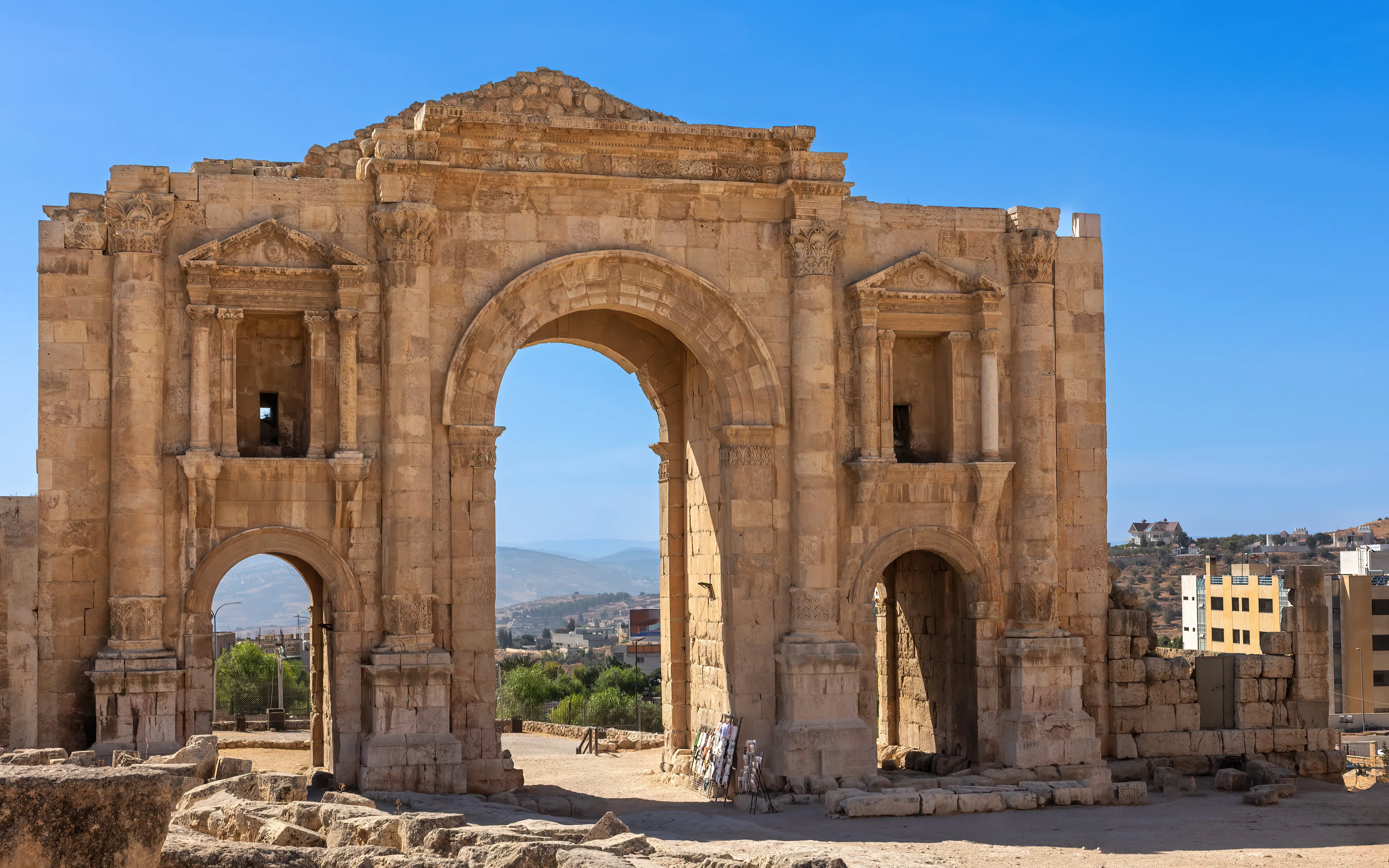
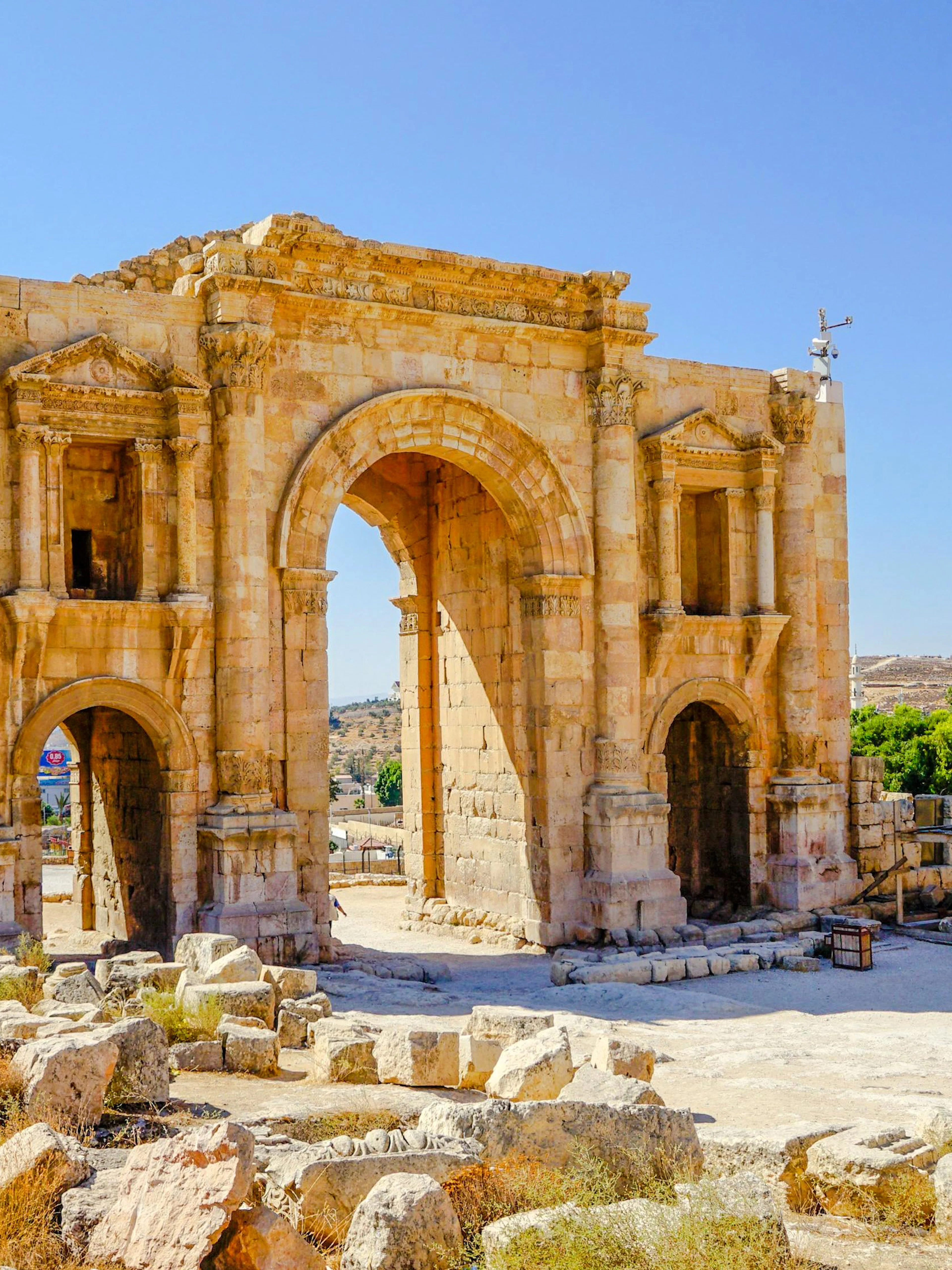
Hadrian's Arch
Roman Ceremonial Gateway – Southern Approach. This gateway marks Jerash’s southern approach and leads to the Hippodrome and Oval Plaza.
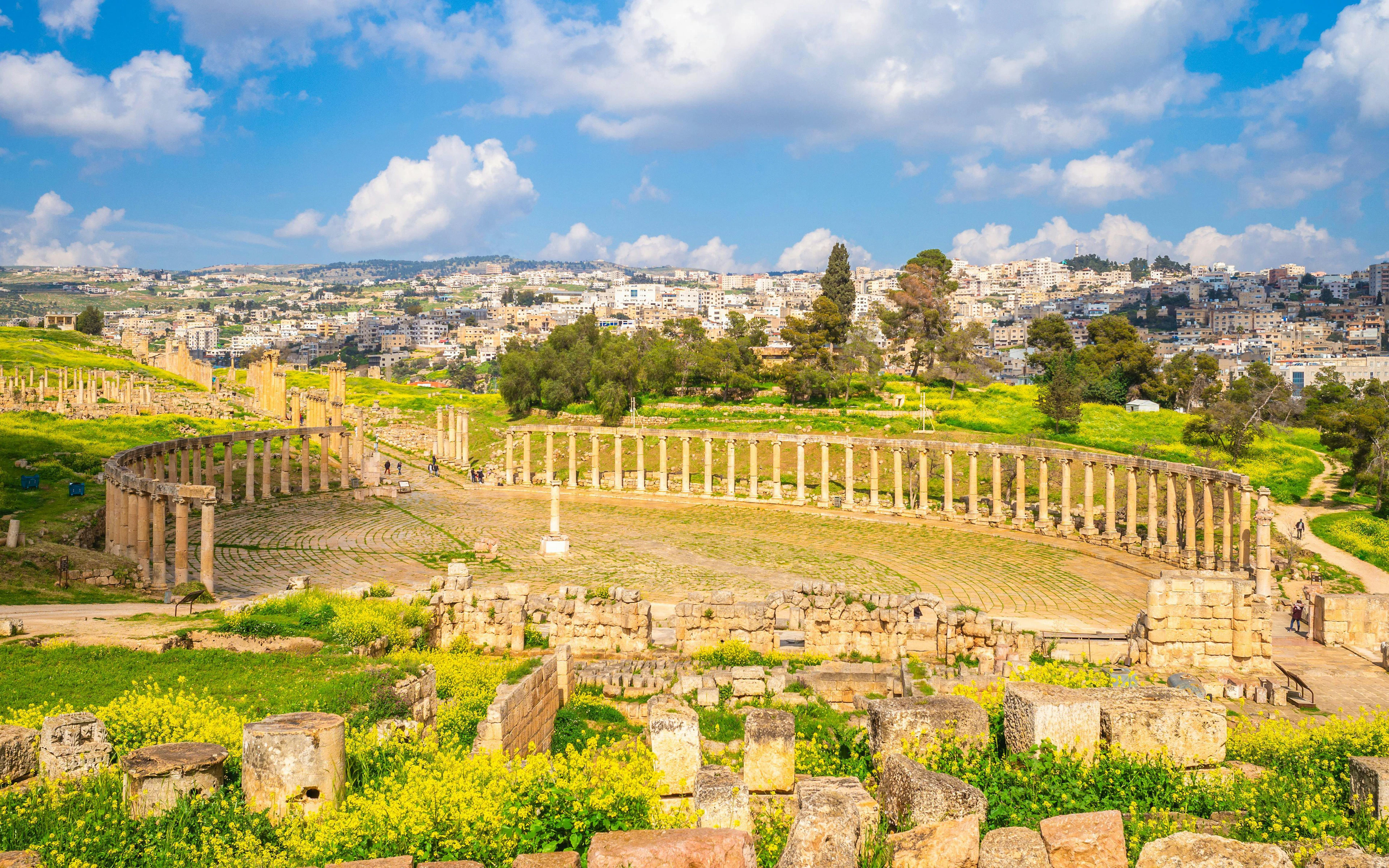
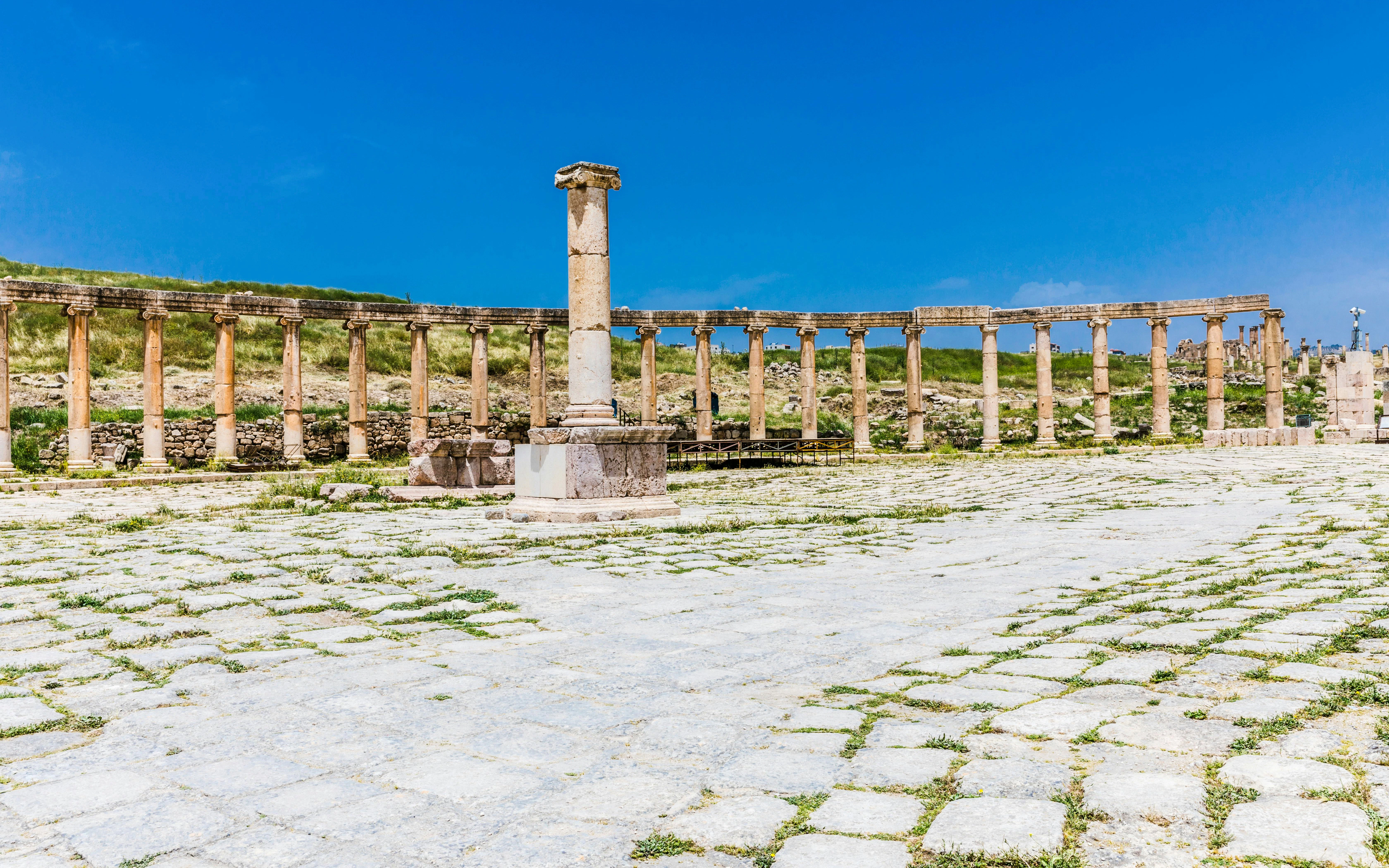
Oval Plaza
Roman Public Square – Central Jerash. The plaza anchors the site layout with columns framing views toward temples and theatres.
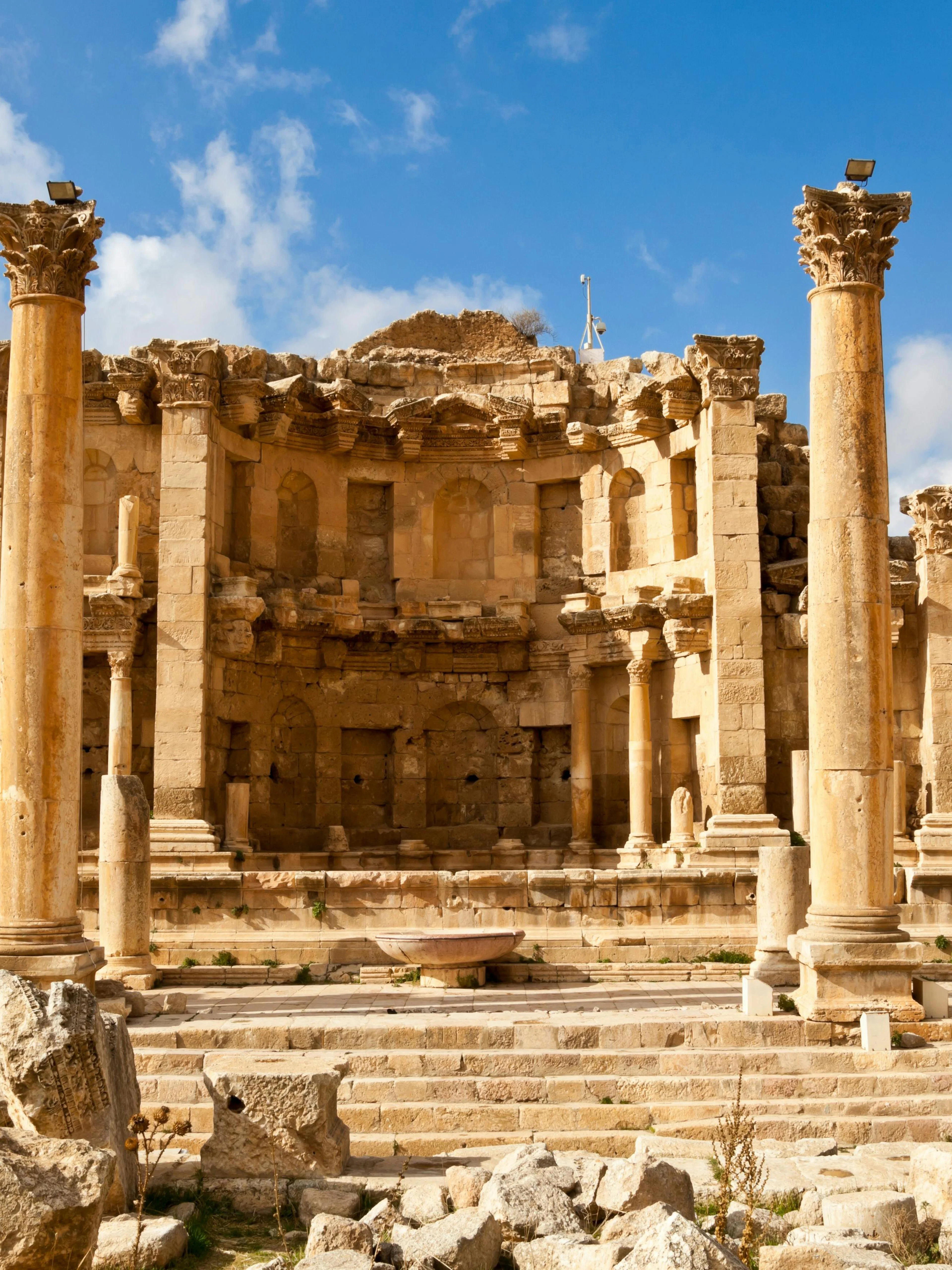
Cardo Maximus
Roman Colonnaded Street – Main Urban Spine. This street links headline monuments and conveys the city’s original grid.
South Theatre
Roman Performance Venue – Upper Southern City. The theatre provides elevated views of Jerash.
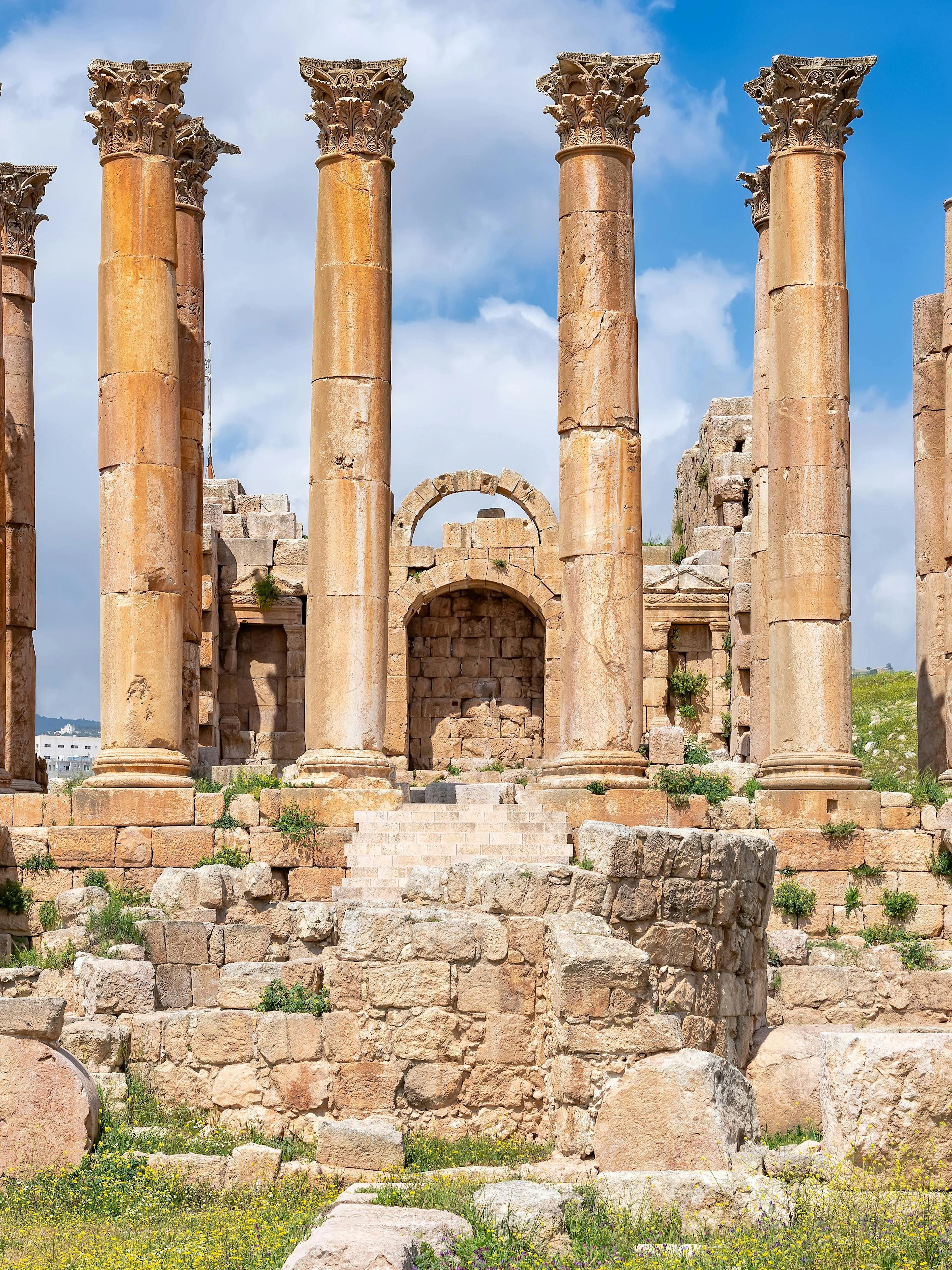
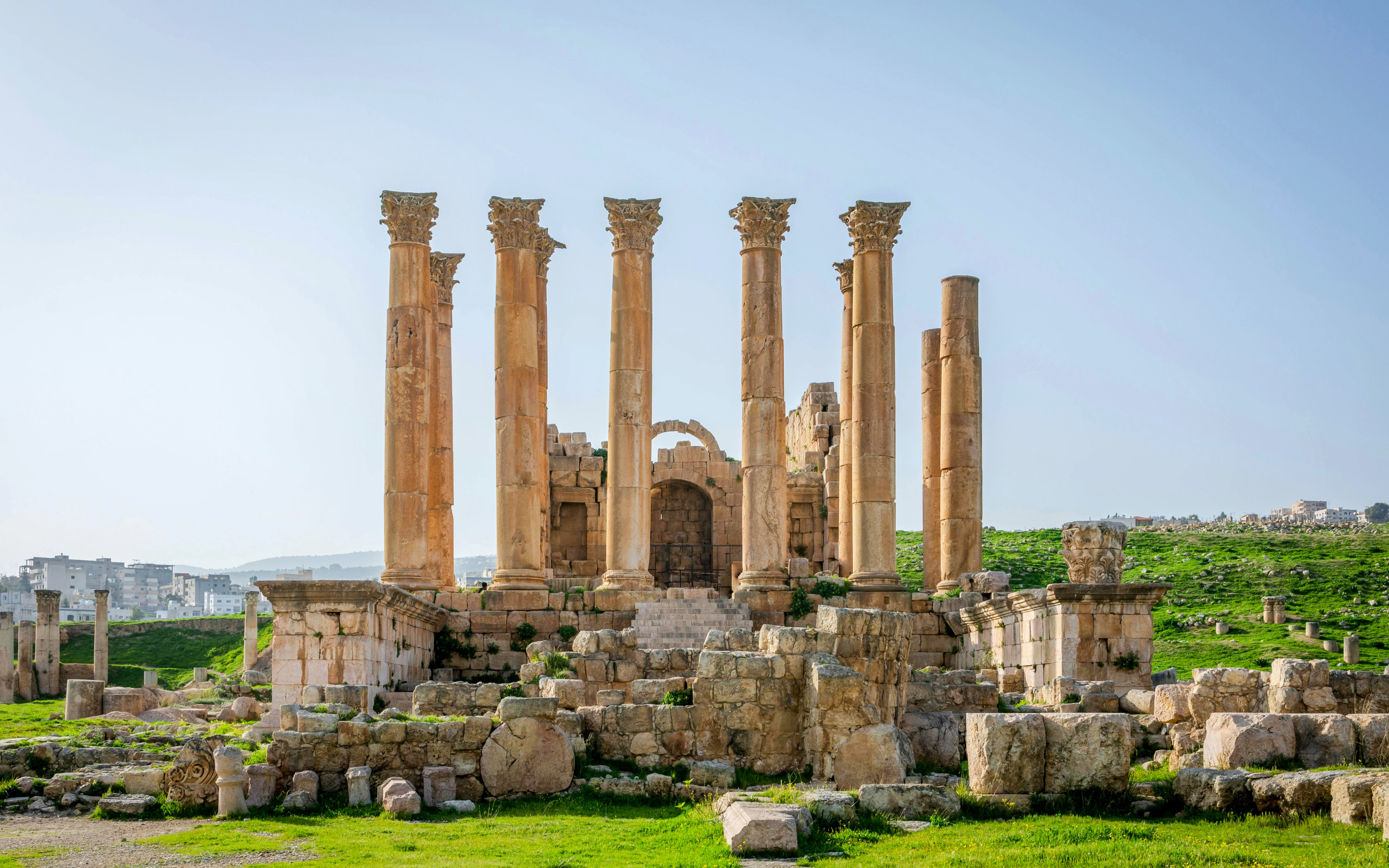
Temple of Artemis
Roman Temple Sanctuary – Hilltop Jerash. The columns mark a clear landmark atop a detour route.
Jerash Archaeological Museum
Archaeological Collection – Neolithic to Mameluk Periods. The museum offers a compact indoor exhibit of regional finds.
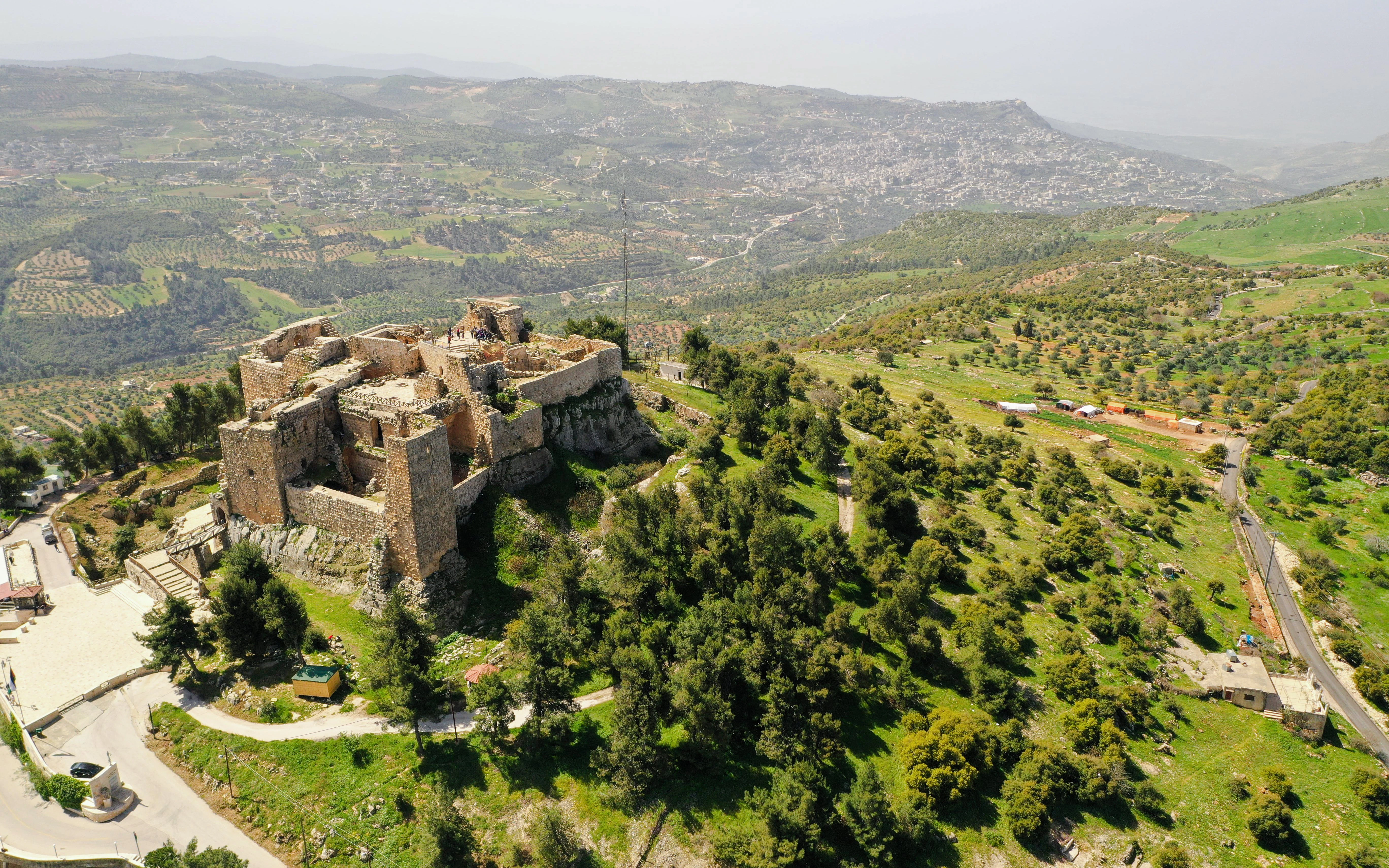
Ajloun Castle
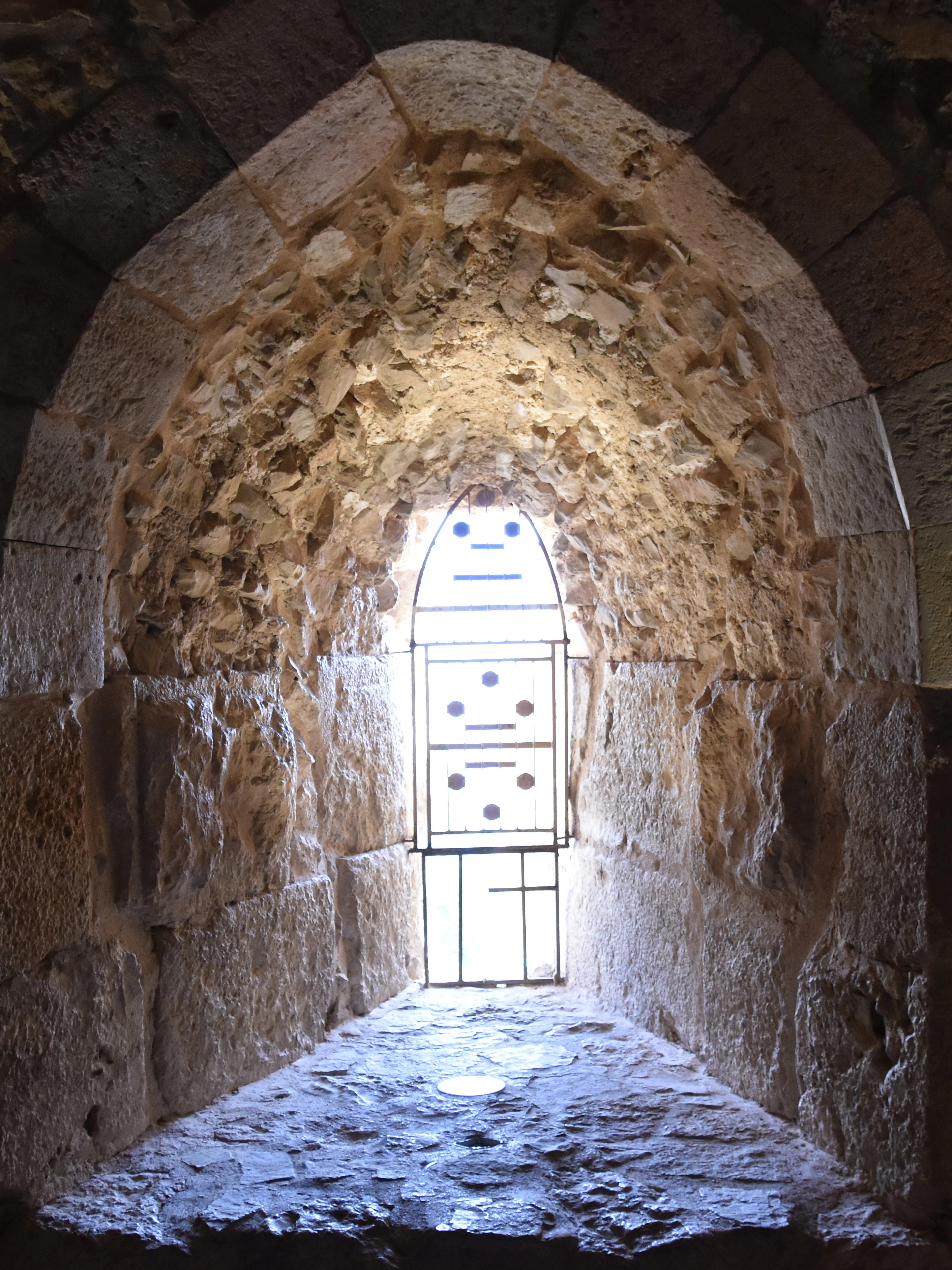
Ayyubid Fortress – 12th-Century Military Architecture. The castle features gates and towers that illustrate its strategic setting.
Ajloun Museum
Archaeological Display – Castle Complex. The museum provides a brief indoor detour within the castle.
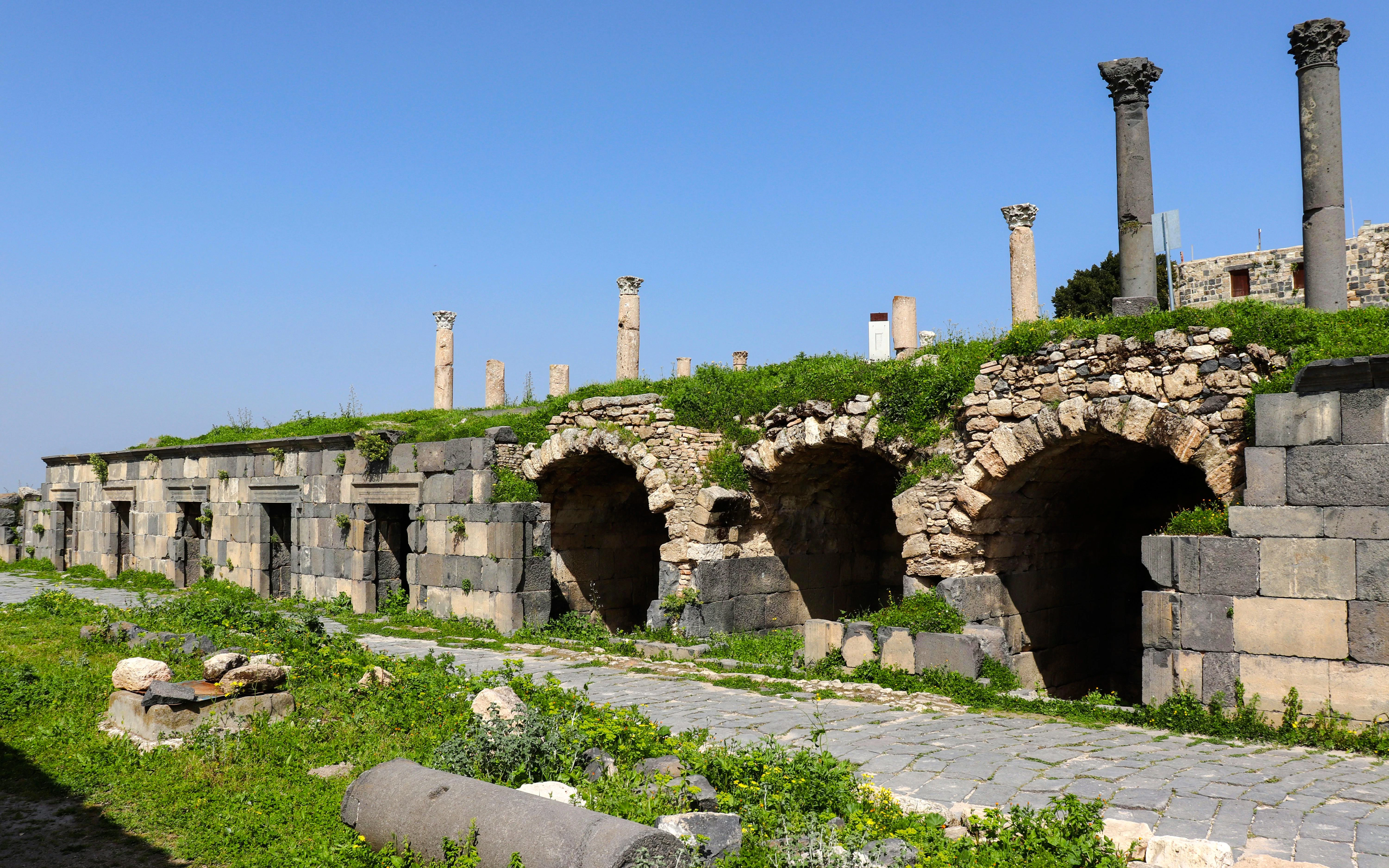
Colonnaded Street
Roman Urban Corridor – Umm Qais Archaeological Area. The street connects ruins and leads to the theatre.
Western Theatre
Roman Theatre – Core Walking Area. The theatre features basalt seating and serves as a midpoint stop.
Umm Qais Museum
Archaeological Collection – Hellenistic to Islamic Periods. The museum offers a brief exhibit with indoor and outdoor elements.
Ottoman village
Later Settlement Layer – Historic Village Quarter. The village provides a quieter detour with stone houses and lanes.
Vaulted Terrace
Viewpoint Circuit – Elevated Western Edge. The terrace offers a main viewpoint of the surrounding valley.
Things to know before booking your Jerash, Ajloun Castle & Umm Qais tickets
- Booking window: Most bookings happen within 0–7 days, but spring and autumn dates fill faster. For Jerash, Ajloun Castle & Umm Qais shared tours, book a few days ahead if you want bundled entry tickets or guiding.
- What’s included: Inclusions vary more than the route name suggests. Some variants cover transport only, while others add entry tickets, a guide, or both. Check whether you’re booking driver-led transfers or guided visits inside the sites.
- Entrances & flow: These day trips normally begin with Amman hotel pickup, then continue by road between the three sites. Jerash, Ajloun Castle, and Umm Qais all accept the Jordan Pass, but no dedicated skip-the-line lane is verified.
- Ways to explore: Full Jerash, Ajloun Castle & Umm Qais trips run about 9–10 hours; Jerash + Ajloun options run about 6–7.5 hours. If pace and clear inclusions matter, choose a fully bundled private option.
- Policies & rules: Expect uneven archaeological paving at Jerash and Umm Qais, plus stairs inside Ajloun Castle. Accessibility details are not fully documented, so confirm directly before booking. In hot months, earlier departures are the better call for this route.
Highlights of your Jerash, Ajloun Castle & Umm Qais day tour from Amman experience
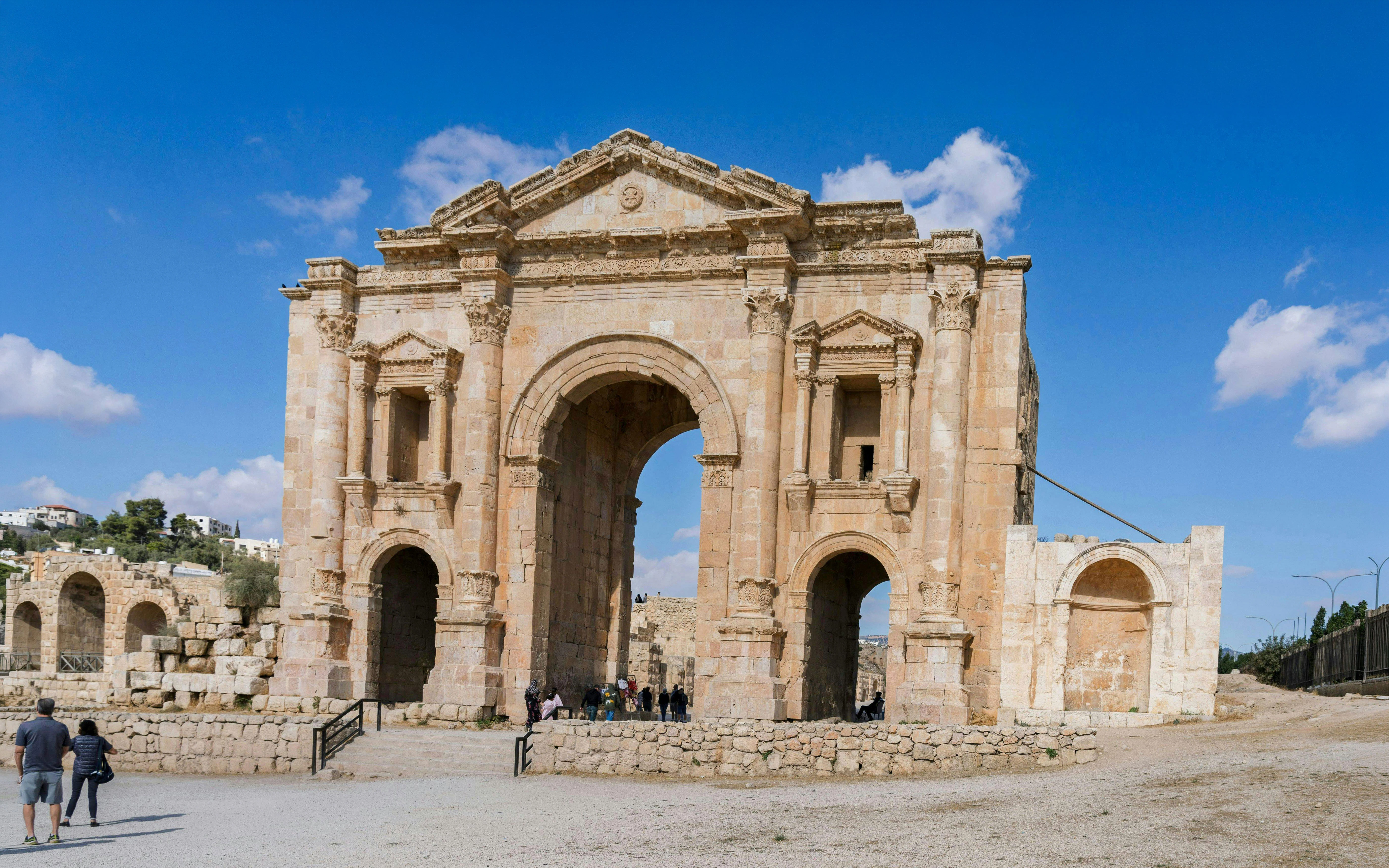
Jerash opening out from the oval plaza
Hadrian’s Arch leads to an unfolding view of the Oval Plaza and evocative ruined streets.
Plan your Jerash, Ajloun Castle & Umm Qais day tour from Amman experience
- Operating hours: Jerash, Ajloun Castle, and Umm Qais generally open from 8am, with seasonal closing between 4pm and 6:30pm.
- Tour length: Full three-site itineraries usually run for about 9–10 hours, including transfers from Amman.
- Departure window: Most departures leave Amman around 7:30am–8am to maximize cooler morning sightseeing.
- Return timing: Most tours get back to Amman between 5pm and 7pm, depending on traffic.
- Best time of day to go: Jerash works best as the first stop; midday heat feels strongest there.
- Best season or month to visit: March–April and October–November bring milder temperatures and clearer views.
- Location: Tours begin in Amman, then follow a northbound route through Jerash, Ajloun, and Umm Qais.
- Address: Pickup usually happens from Amman hotels; the exact point depends on the selected variant.
- Google Maps: Find directions here
Getting there:
- Private tours: Most private variants include door-to-door hotel pickup and return within Amman.
- Shared tours: Operators usually send the pickup point or hotel-lobby timing after booking confirmation.
- Timing buffer: A 10–15 minute buffer helps, since Amman traffic can shift pickup order.
- Physical effort: Jerash involves the longest walk, mostly across exposed stone paving and broad open ruins.
- Terrain: Ajloun Castle includes stairs, slopes, and tighter medieval passages than the other two stops.
- Road comfort: The mountain road toward Ajloun can feel twisty for motion-sensitive travelers.
- Weather dependency: Summer heat, winter rain, and haze can affect walking comfort, footing, and viewpoints.
- Age or participation constraints: No verified minimum age appears in current sources; day length is the main challenge.
- Accessibility notes: Current sources do not verify step-free routes across all three sites.
- Jerash: The main entry area includes a visitor center and the Jerash Archaeological Museum.
- Ajloun Castle: Castle admission includes the small museum inside the fortress complex.
- Umm Qais: The site includes a museum and a terrace dining area with valley views.
- Transport comfort: Current tour formats commonly use air-conditioned vehicles for the full route from Amman.
- Restrooms: Site restrooms are available but can feel basic during busier periods.
- Unconfirmed amenities: Current sources do not verify lockers, refill stations, Wi-Fi, or charging points.
- Footwear: Closed-toe walking shoes handle uneven paving, worn steps, and basalt surfaces more comfortably.
- Clothing: Light, breathable layers work best from late spring through early autumn.
- Sun protection: A hat, sunglasses, and sunscreen matter most at Jerash’s exposed archaeological areas.
- Extra layer: A light jacket helps on winter visits and breezier hilltop sections at Ajloun.
- Bag choice: A small day bag works well for water, tissues, snacks, and medication.
- What to skip: Large luggage feels impractical on a fast-moving, full-day multi-stop route.
- Photo ID: A passport or photo ID helps with hotel pickup and Jordan Pass use.
- Jordan Pass: Jerash, Ajloun Castle, and Umm Qais all accept the Jordan Pass.
- Vouchers: Entry inclusion varies by variant, so the correct ticket, QR code, or pass matters.
- Fast-track access: Current sources do not verify a dedicated skip-the-line lane at these sites.
- Photography: Regular photography is generally allowed across the archaeological areas and viewpoints.
- Drone rules: Drone use near heritage sites needs prior permission and cannot be assumed on arrival.
Tips & guidelines
- Wear closed-toe walking shoes with good grip; Jerash’s paving stones and Ajloun’s castle stairs are uneven and sometimes slippery, especially after winter rain.
- In hot months, the sun is intense, and shade is limited at Jerash and Umm Qais; pack a wide-brimmed hat, sunglasses, high-SPF sunscreen, and consider a small UV umbrella.
- Dress modestly, with shoulders and knees covered; you’ll be around local families at all three sites, especially on Fridays, and this also protects your skin from the sun and wind.
- If you’re prone to motion sickness, Ajloun’s winding mountain roads can be challenging; sit near the front of the vehicle and take medication or ginger beforehand.
- Carry a small daypack with at least one litre of water, light snacks, tissues, and hand sanitizer; restroom standards and lunch timing can vary between stops.
- For photos, softer light hits Jerash’s Oval Plaza early in the morning, while Umm Qais viewpoints are lovely late in the afternoon; haze is common midday, especially in summer.
Frequently asked questions about Jerash, Ajloun Castle & Umm Qais day tour tickets
Yes. Current tours from Amman are sold as full-day trips covering all three sites. The trade-off is pace: the route is feasible, but it feels fast-moving rather than leisurely once transfers, walking, and a meal stop are added.
Most tours run about 9–10 hours door to door. Exact timing depends on your Amman pickup point, traffic, route order, and whether your itinerary includes lunch or longer independent time at Jerash, Ajloun Castle, or Umm Qais.
Book private if you want control over stop length, return time, or heat management. Shared tours lower the per-person cost, but the route is more fixed. On a long north Jordan day trip, that flexibility can make a noticeable difference.
Not always. Some variants explicitly include entry tickets, while others do not. Without bundled admission, current listed foreigner rates total JOD 18 across the three sites: Jerash JOD 10, Ajloun Castle JOD 3, and Umm Qais JOD 5.
Not necessarily. Some variants include a guide, while others include only an English-speaking driver or host. If historical context matters to you, choose a ticket that clearly says “Guide” instead of assuming the driver will guide you inside each site.
Yes. Jerash, Ajloun Castle, and Umm Qais are all on the current Jordan Pass attraction list. Bring your passport or ID with the pass. If your tour already bundles entry tickets, check the variant terms before assuming any separate refund or adjustment.
Usually yes if you want scenery as well as ruins. Umm Qais adds black-basalt remains, an Ottoman village setting, and wide views toward Lake Tiberias and the Golan Heights. The trade-off is extra driving and less time at the other stops.
Expect a fair amount of walking. Jerash is the longest stop and involves extensive open-air exploration, while Ajloun Castle includes stairs and uneven historic surfaces. Umm Qais is gentler in parts, but it still uses archaeological paths rather than smooth modern walkways.
Usually yes for general visitors, but the challenge is stamina, not admission rules. The day is long, exposed to sun, and includes stairs and uneven ground. Private tours work better if you want slower pacing, more breaks, or flexibility for mixed ages.
Wear comfortable closed-toe shoes and plan for sun. A hat, sunscreen, and extra water are especially useful at Jerash, where shade is limited. In cooler months, bring layers because Ajloun’s hilltop setting can feel noticeably colder than Amman.
Full step-free access could not be verified from current official sources. These are historic archaeological sites, not purpose-built accessible attractions. Ajloun Castle is the most challenging because of stairs and elevated defensive areas. Confirm route feasibility with the operator before booking.
Cancellation and date-change rules depend on the selected variant. Some tickets may allow changes or free cancellation within a stated window, while others are fixed once confirmed. Check the policy on your exact Jerash, Ajloun, and Umm Qais booking before paying.
Official sources currently show a discrepancy. The government ticket portal lists seasonal hours, including summer hours up to 6:30pm, while the Jordan Pass page shows 5pm. Recheck the live schedule shortly before travel, especially in winter or during Ramadan.
A dedicated fast-track lane could not be verified from current official sources. Some marketplace pages use generic skip-the-line wording, but you should not assume special entry lanes at Jerash, Ajloun Castle, or Umm Qais unless your exact product states that clearly.
Standard photography is allowed at the sites. Drones are different: prior permission is required near archaeological areas. If aerial footage matters to you, arrange approval in advance rather than assuming you can get same-day clearance at Jerash, Ajloun Castle, or Umm Qais.